Seven groups of biological mechanisms proposed to drive Long COVID and PACVS. Each is graded separately for each condition, with its evidence attached.
Seven groups at a glance
Long COVID and PACVS are syndromes, not single diseases. Different people have different dominant mechanisms, and several often run at once. This page sorts the evidence into seven groups, grades each one separately for Long COVID and for PACVS, and shows how they reinforce one another.
How to read the grades. Each grade describes evidence in patients with that condition. A mechanism can be well established in general biology and still be a hypothesis in PACVS.
Established Replicated and broadly accepted, often as general biology.
Supported Several independent studies in patients with the condition.
Emerging Early or small studies in patients; awaiting replication.
Contested Studies in patients disagree.
Hypothesis Proposed mechanism without direct evidence in this condition.
How the groups connect
The groups form a network of feedback loops, not a single chain of cause and effect. Each arrow is a proposed influence. Hover over a group to highlight its connections, or select it to jump to its section.
── drives- - - amplifies· · · impairs
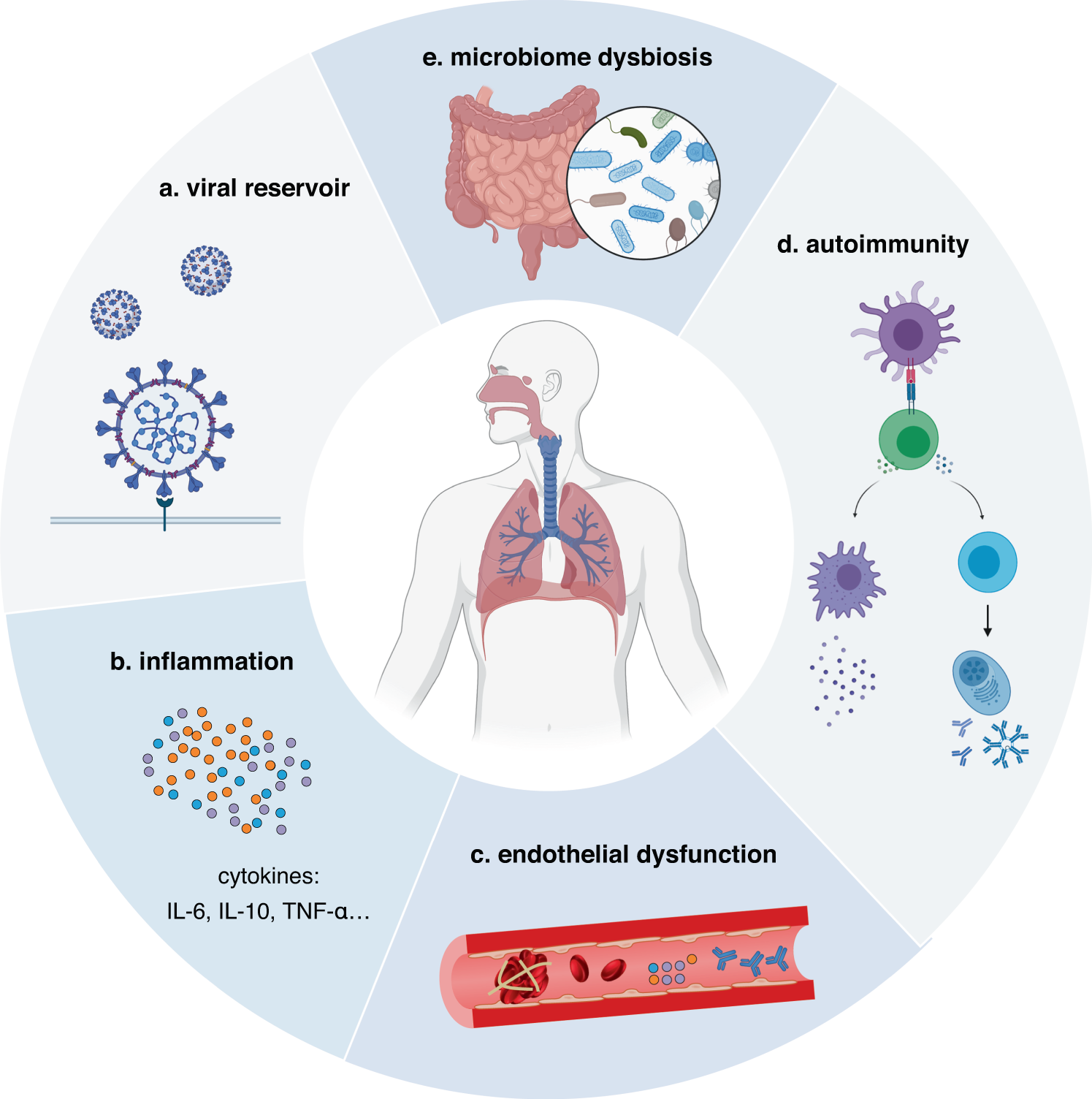
Proposed relationships drawn from the literature cited below. Edges are hypotheses, not measured effect sizes.Five-segment wheel summarising the main proposed drivers of Long COVID around a central human figure: (a) viral reservoir, (b) inflammation (cytokines such as IL-6, IL-10, TNF-α), (c) endothelial dysfunction with clotting in a blood vessel, (d) autoimmunity, and (e) gut microbiome dysbiosis.Reproduced from Li et al., Signal Transduction and Targeted Therapy (2023), Fig. 3, doi:10.1038/s41392-023-01640-z, CC BY 4.0. Unmodified. Source · CC BY 4.0
1
Persistent viral antigen
Spike protein or other viral material lingers for months and keeps the immune system engaged.
In some people, SARS-CoV-2 RNA or proteins, especially spike, can still be detected long after the acute event. These may sit in tissue reservoirs or inside immune cells, or circulate in blood. Persistent antigen gives the immune system an ongoing target and is a plausible upstream trigger for several of the other groups.
Long COVIDSupported
Circulating spike and S1 protein within monocytes reported up to 12–15 months after infection.[1,2]
Post-Acute COVID Vaccination SyndromeEmerging
Higher circulating spike reported in a preprint cohort of people with post-vaccination syndrome; not yet peer-reviewed.[3,4]
Components
Circulating spike antigenemiaSupportedMeasured in patients
Full-length spike detected in plasma, mainly in people with post-acute symptoms, up to a year after diagnosis.[1,3]
S1 protein in CD16⁺ monocytesEmergingMeasured in patients
Non-classical monocytes carrying S1 protein up to 15 months after infection, a possible cellular reservoir.[2]
Tissue reservoirsSupportedMeasured in patients
Viral RNA or protein reported in gut, lymphoid and other tissues; whether it is replication-competent varies by study.[5]
Three completed placebo-controlled trials of nirmatrelvir-ritonavir in established Long COVID (about 1,200 participants in total) found no benefit; other antivirals and combinations are still being tested.
Nirmatrelvir-ritonavir, 15 days (STOP-PASC) Randomised, placebo-controlled trial in 155 adults with Long COVID lasting a median of about 17 months: the drug was generally safe but did not improve the primary outcome (pooled severity of six core symptoms at 10 weeks).[6]
Nirmatrelvir-ritonavir, 15 days (PAX LC) Decentralised, double-blind phase 2 trial in 100 adults across the USA: no significant difference from placebo-ritonavir in the PROMIS-29 physical health score at day 28 (adjusted difference -0.55, p=0.54).[7]
Nirmatrelvir-ritonavir, 15 or 25 days (RECOVER-VITAL) NIH-funded double-blind trial at 69 US sites in 959 adults with cognitive, autonomic or exercise-intolerance phenotypes: no benefit on the primary endpoint in any phenotype for either course length, and no safety signal.[8]
Ensitrelvir (PREVAIL-LC) and other antiviral combinations A placebo-controlled ensitrelvir trial in about 40 people with Long COVID (NCT06161688) has finished enrolment, and a trial of repurposed HIV antivirals (NCT06511063) is recruiting; no peer-reviewed efficacy results had been published at the time of writing.
Anti-spike monoclonal antibodiesIn trials
Dramatic responses were described in a few individual cases, but the only randomised trial reported so far (a small preprint) found no benefit; a larger placebo-controlled trial is recruiting.
AER002 (single infusion) Phase 2a double-blind trial, 36 participants randomised 2:1: safe, but no difference from placebo in the primary PROMIS-29 physical health score at 90 days or in objective or biomarker measures. Reported as a preprint, not yet peer reviewed.[9]
Casirivimab/imdevimab Report of three index patients with severe Long COVID who described complete, rapid remission after the infusion. These were uncontrolled case reports, so they generate hypotheses only.[10]
Pemivibart Case series of three people with longstanding Long COVID who reported symptom improvement after infusion; in one, the benefit waned after 2-3 weeks. Uncontrolled, and pemivibart is not approved for this use.[11]
Sipavibart A placebo-controlled phase 2 trial in about 100 people with Long COVID is recruiting (NCT07021794); no results yet.
Clearing or neutralising residual vaccine-derived spike (PACVS)Theoretical
No clinical treatment studies aimed at clearing spike protein in people with post-vaccination syndrome were found; this approach currently rests only on mechanistic hypotheses.
No published treatment studies Searches of Europe PMC (to October 2026) found no trial or case series testing a spike-clearing strategy in PACVS. Studies in Long COVID (antivirals, monoclonal antibodies) do not directly apply, because vaccine-derived spike does not involve ongoing viral replication.
In people who have had both infection and vaccination, how do you tell vaccine-derived spike from infection-derived spike?
Is persistent antigen a cause of symptoms or a marker of an immune system that failed to clear it?
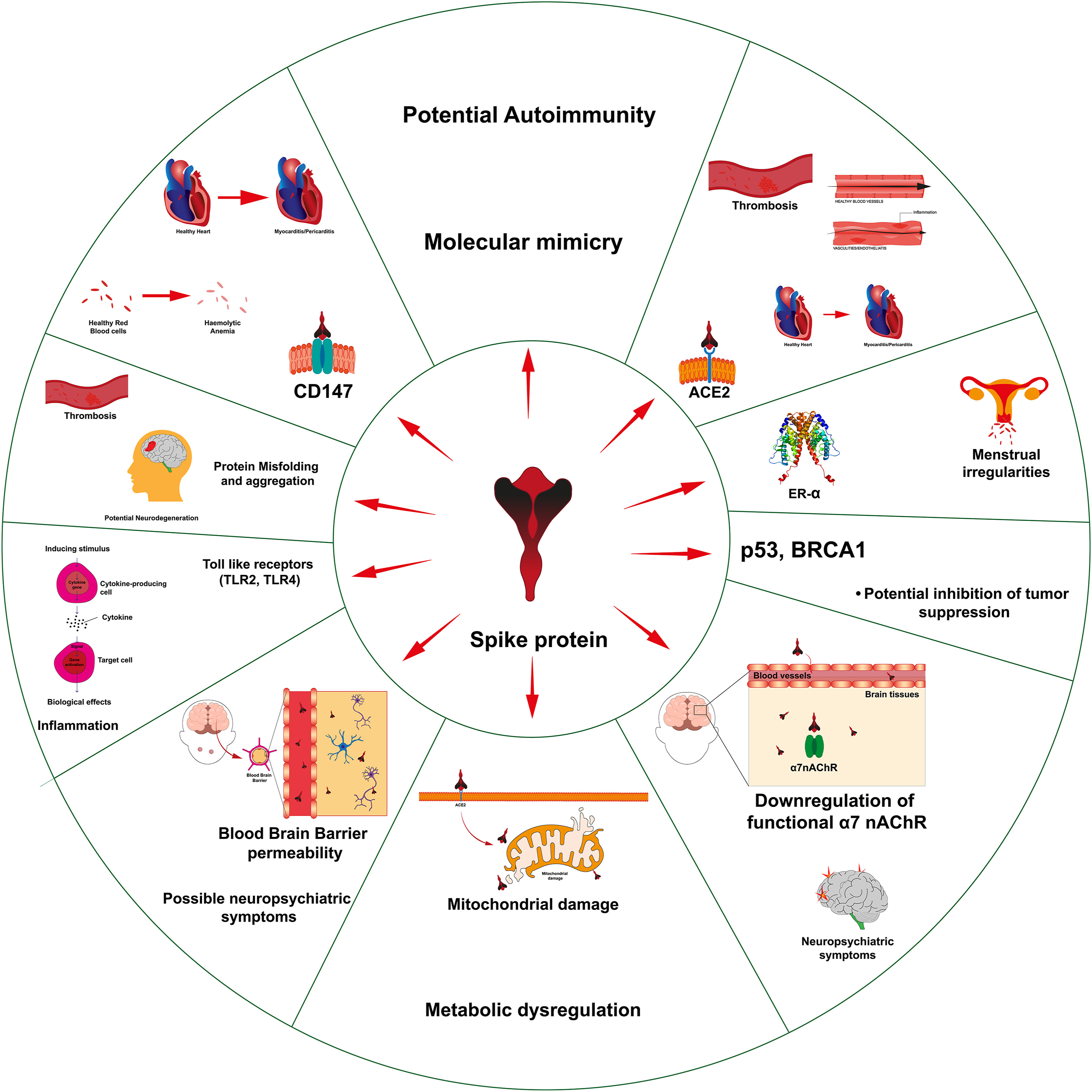
Radial diagram with the spike protein at the centre and arrows to the receptors and processes it is proposed to engage (ACE2, CD147, toll-like receptors TLR2/TLR4, α7 nicotinic acetylcholine receptor, estrogen receptor-α, p53/BRCA1, mitochondria), with outer segments listing downstream effects such as thrombosis, myocarditis, molecular mimicry/autoimmunity, blood-brain barrier permeability, neuropsychiatric symptoms, metabolic dysregulation and menstrual irregularities.Reproduced from Halma & Varon, Heliyon (2025), Fig. 1, doi:10.1016/j.heliyon.2025.e43478, CC BY 4.0. Unmodified. Source · CC BY 4.0
2
Immune dysregulation & viral reactivation
The immune system stays stuck in an altered state and lets dormant viruses re-emerge.
Immune profiling shows lasting shifts in myeloid and lymphocyte populations, signs of T-cell exhaustion, and reactivation of latent herpesviruses such as Epstein–Barr virus. Low cortisol has also been reported. Together these describe an immune system that is chronically activated but not effective.
Long COVIDSupported
In 275 people, Long COVID showed altered immune cell populations, higher EBV antibodies and lower cortisol.[12]
Post-Acute COVID Vaccination SyndromeEmerging
Preprint: fewer memory/effector CD4⁺ T cells, more TNFα⁺ CD8⁺ T cells and more frequent EBV reactivation (42 participants vs 22 controls).[3]
Components
Altered myeloid and lymphocyte populationsSupportedMeasured in patients
Shifts in monocyte, T-cell and B-cell subsets that persist after recovery from the acute event.[3,12]
Latent herpesvirus reactivationSupportedMeasured in patients
Raised antibody responses to EBV, consistent with recent reactivation.[3,12]
Low cortisolEmergingMeasured in patients
Lower morning cortisol than in controls, which may blunt normal anti-inflammatory control.[12]
Gut dysbiosis and barrier leakEmergingMeasured in patients
Altered microbiome and increased intestinal permeability are proposed to sustain systemic immune activation.[5]
Broad anti-inflammatory and immunomodulatory drugsIn trials
Several large randomised trials have been mostly negative. Colchicine gave at most a small, short-lived effect on fatigue, and JAK-inhibitor and mTOR-inhibitor trials are still running.
Colchicine Double-blind RCT in India (346 analysed): no improvement in 6-minute walk distance at 52 weeks, or in other outcomes. A UK open-label trial (778 randomised) found a small fatigue reduction at 12 weeks (-1.5 points on a 10-50 scale) that was gone 12 weeks after stopping.[13,14]
Losartan plus prednisolone (cardiac inflammation) Double-blind RCT in 279 people with Long COVID and MRI-defined cardiac inflammation: neutral on the primary endpoint (change in left-ventricular ejection fraction); symptom differences were not statistically significant.[15]
Temelimab (anti-HERV-W envelope antibody) Double-blind RCT in 203 HERV-W-positive adults with post-COVID fatigue: no difference from placebo in fatigue at 24 weeks, or in secondary outcomes.[16]
Baricitinib (REVERSE-LC) and low-dose sirolimus Placebo-controlled trials are recruiting (baricitinib, about 550 participants, NCT06631287; sirolimus, NCT06960928); no results yet.
Low-dose naltrexoneInvestigational
Widely used off-label, but by May 2026 there were no published randomised trial results in Long COVID, only small before-and-after studies; placebo-controlled trials are under way.
Low-dose naltrexone (1-6 mg/day) A 2026 systematic review found no completed RCTs. Four uncontrolled pre-post studies (155 patients in total) suggested improvement in fatigue, brain fog, pain, sleep and function, with low certainty of evidence. A Canadian RCT (NCT05430152) has finished and another (NCT06366724) is recruiting.[17]
Evidence is limited to an uncontrolled case series in Long COVID and one small older trial in ME/CFS; controlled Long COVID results are not yet published.
Valacyclovir plus celecoxib (IMC-2), with or without nirmatrelvir-ritonavir Open-label case series of 24 people with Long COVID: participants reported less fatigue, more so when nirmatrelvir-ritonavir was added. There was no placebo group. A randomised pilot trial (NCT06316843) has finished but had not been published in a journal, and a larger trial (NCT07597902) is planned.[18]
Valganciclovir (in ME/CFS, not Long COVID) Double-blind RCT in 30 ME/CFS patients with high HHV-6/EBV antibody titres: the main fatigue score (MFI-20) did not differ significantly, although some secondary fatigue and cognition measures favoured the drug.[19]
Is EBV reactivation a driver of symptoms or a bystander sign of immune exhaustion?
Which immune signatures are shared between Long COVID and PACVS, and which differ?
3
Autoimmunity: GPCR and RAS autoantibodies
Autoantibodies against receptors that control blood vessels and the autonomic nervous system.
Functional autoantibodies against G-protein-coupled receptors (GPCRs), including adrenergic, muscarinic and angiotensin receptors, have been reported in both Long COVID and PACVS. Because these receptors regulate vascular tone, heart rate and the renin–angiotensin system (RAS), the antibodies are a plausible link to dysautonomia. Replication across platforms is still unsettled.
Long COVIDEmerging
Functional GPCR autoantibodies detected in all 31 patients tested.[20]
Post-Acute COVID Vaccination SyndromeEmerging
In 191 PACVS patients vs 89 vaccinated controls, AT1-receptor and α2B-adrenergic receptor antibodies plus IL-6 separated PACVS from a normal vaccine response.[21]
Components
Functional anti-GPCR autoantibodiesEmergingMeasured in patients
Antibodies that activate or block β-adrenergic, muscarinic and other receptors in bioassays.[20]
RAS-axis antibodies (AT1R ↑, α2B-AR ↓)EmergingMeasured in patients
A blood marker pattern that, combined with IL-6, distinguished PACVS from a normal post-vaccination response with about 90% sensitivity.[21]
Replication across assay platformsContestedFrom ME/CFS
In ME/CFS, one study found raised GPCR antibody reactivity, while a larger 2025 study using different profiling found no difference from controls.[22,23]
What can be measured
GPCR autoantibody panel (ELISA)Blood
Functional GPCR bioassayBlood
IL-6Blood
Linked symptoms
Orthostatic intolerance
Palpitations
Neurological symptoms
Fatigue
Treatments and how they have fared
Removing antibodies from the blood (immunoadsorption, plasma exchange)Investigational
Open-label studies reported improvement, but the sham-controlled trials published so far found no benefit over sham, even though autoantibodies were removed.
Immunoadsorption (open-label) In 20 people with post-COVID ME/CFS and raised β2-adrenergic receptor antibodies, five sessions were followed by a mean 17.8-point gain in SF-36 physical function, with 14 of 20 classed as responders. There was no control group.[24]
Immunoadsorption vs sham Patient-blinded, sham-controlled crossover RCT (IAMPOCO, 40 patients): no difference from sham in symptom severity or fatigue, although GPCR autoantibodies were depleted. A separate uncontrolled study of 18 patients also found no objective improvement in physical performance.[25,26]
Therapeutic plasma exchange vs sham Double-blind phase 2 RCT in 50 people with post-COVID condition: safe, but no difference from sham exchange in any efficacy measure.[27]
Intravenous immunoglobulin (IVIG)In trials
Improvement has been reported in case series and single cases (including PACVS small-fibre neuropathy); a large randomised trial in Long COVID POTS has finished, but its results are not yet published.
IVIG and corticosteroids in Long COVID neuropathy In 17 Long COVID patients evaluated for neuropathy (most had small-fibre neuropathy), 11 received corticosteroids and/or IVIG. Symptoms improved by an average of 52%, but no patient fully recovered. Uncontrolled.[28]
Immunotherapy after COVID-19 vaccination (PACVS) In an observational study of 23 people with neuropathic symptoms after vaccination, 7 of 12 given oral steroids improved substantially, and 3 non-recovering patients improved after IVIG (preprint). Single case reports describe improvement of PACVS small-fibre neuropathy after IVIG.[29,30,31]
IVIG vs placebo (RECOVER-AUTONOMIC) An NIH placebo-controlled trial of IVIG in about 200 people with Long COVID POTS has completed (NCT06305793); results had not been published at the time of writing.
B-cell and plasma-cell directed therapyInvestigational
B-cell depletion with rituximab failed in a large ME/CFS trial; plasma-cell targeting looked promising in a tiny open pilot; no controlled Long COVID or PACVS results exist yet.
Rituximab (in ME/CFS) Double-blind RCT in 151 ME/CFS patients over 24 months: did not improve the primary outcomes (response rate 26% vs 35% with placebo), and serious adverse events were more frequent with rituximab.[32]
Daratumumab (in ME/CFS) Open-label pilot in 10 patients: well tolerated, and 6 improved markedly in physical function. With no control group, the authors say no firm conclusions can be drawn.[33]
CD19-directed B-cell depletion A trial in post-infectious ME/CFS, including post-COVID cases (NCT07724834), is planned and not yet recruiting.
Neutralising or lowering autoantibodies with drugs (aptamer, FcRn blocker)Investigational
Results are mixed: a small exploratory trial of the aptamer BC007 reported fatigue improvement, while a placebo-controlled efgartigimod trial in post-COVID POTS showed no difference in posted results.
BC007 / rovunaptabin (reCOVer) Exploratory, double-blind, placebo-controlled crossover phase IIa trial in 30 patients with GPCR autoantibodies. The primary endpoint was safety (no significant difference in adverse events); secondary fatigue and quality-of-life scores improved. A larger sponsor-run phase 2 trial (NCT05911009) is completed but not published in a journal.[34]
Efgartigimod (FcRn blocker) in post-COVID POTS Phase 2 placebo-controlled trial (53 enrolled; NCT05633407). Results posted on ClinicalTrials.gov show similar changes in autonomic symptom score (COMPASS-31) at week 24 with drug and placebo (-14.4 vs -16.0); not yet published in a journal.
Why do ELISA, bioassay and antigen-profiling methods disagree, and which one reflects biology?
Do antibody levels track symptom severity over time?
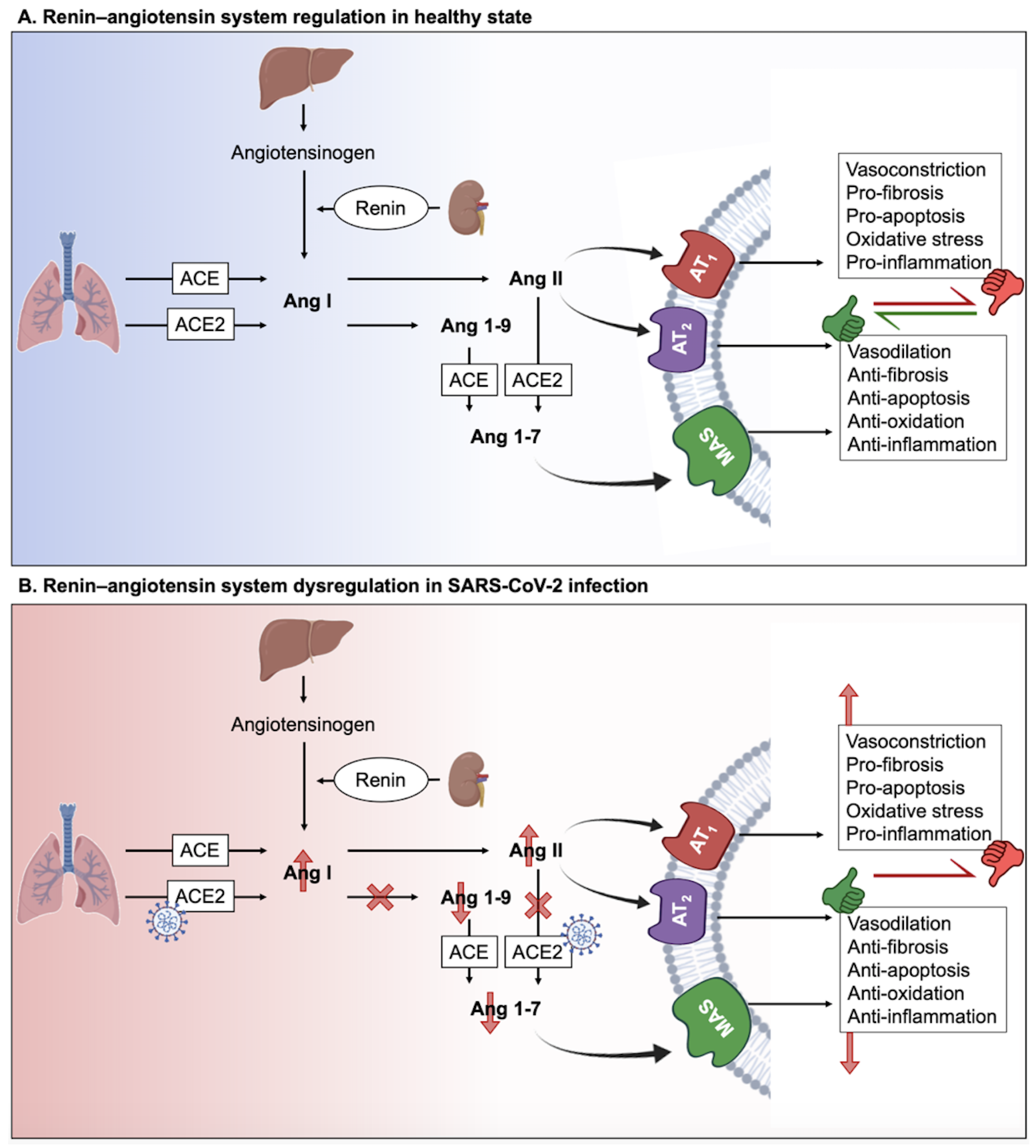
Two-panel schematic of the renin-angiotensin system. (A) In health, ACE/Ang II/AT1 signalling (vasoconstriction, fibrosis, oxidative stress, inflammation) is balanced by ACE2/Ang 1-7/MAS and AT2 signalling (vasodilation, anti-inflammatory). (B) In SARS-CoV-2 infection, viral binding to ACE2 reduces Ang 1-9 and Ang 1-7 and raises Ang II, tipping the balance towards the harmful AT1 arm.Reproduced from Khazaal et al., Molecules (2022), Figure 1, doi:10.3390/molecules27092903, CC BY 4.0. Unmodified. Source · CC BY 4.0
4
Endothelial & thrombo-inflammatory injury
Damaged vessel walls and abnormal micro-clots limit oxygen delivery to tissue.
The lining of small blood vessels can become activated and dysfunctional. Plasma from people with Long COVID contains amyloid-like micro-clots that resist breakdown, alongside activated platelets. The net effect is proposed to be poor microcirculation and reduced oxygen extraction, even when large-vessel tests look normal.
Long COVIDSupported
Fibrinolysis-resistant micro-clots, platelet pathology and impaired endothelial function reported in large cohorts.[35,36,37]
Post-Acute COVID Vaccination SyndromeHypothesis
Proposed by analogy with Long COVID; no PACVS-specific study has been verified for this page yet.
Components
Endothelial dysfunctionSupportedMeasured in patients
Of 618 people with Long COVID, about half had an impaired endothelial quality index, which was independently associated with fatigue, chest pain and cognitive symptoms.[37]
Fibrinaloid micro-clotsEmergingMeasured in patients
Amyloid-like clots that carry α2-antiplasmin and resist fibrinolysis. No completed randomised treatment trial based on them exists yet.[35,36]
Platelet hyperactivationEmergingMeasured in patients
Platelets that are spread and clumped, adding to inflammation and micro-clot formation.[36]
Invasive exercise testing in ME/CFS shows low cardiac preload and poor oxygen extraction by tissue.[38]
What can be measured
Micro-clot fluorescence microscopyBlood
α2-antiplasminBlood
Endothelial function testingFunctional
Invasive CPETFunctional
Linked symptoms
Exercise intolerance
Chest discomfort
Brain fog
Cold extremities
Treatments and how they have fared
Anticoagulant and antiplatelet regimensInvestigational
The only randomised test so far (rivaroxaban) did not reduce fatigue, and the more aggressive 'triple therapy' has only uncontrolled, non-peer-reviewed data.
Triple antithrombotic therapy (clopidogrel + aspirin + apixaban) In an uncontrolled South African series of 91 Long COVID patients treated by their clinician, most reported symptom resolution and microclot/platelet scores fell; there was no control group and the report is a preprint.[39]
Rivaroxaban 10 mg daily (STIMULATE-ICP) In an open-label RCT across 12 UK clinics (778 randomised; 197 to rivaroxaban), rivaroxaban did not significantly improve the primary outcome of 12-week fatigue versus usual care (-1.06 points on the 10-50 FAS scale, p=0.14).[14]
Two sham-controlled randomised trials found no benefit over sham; positive reports come from uncontrolled case series and case reports.
Therapeutic plasma exchange In a double-blind, sham-controlled phase II RCT (n=50, six sessions), TPE was safe but did not improve any efficacy measure (function, symptoms, quality of life, cognition) versus sham over 90 days.[27]
Immunoadsorption (tryptophan adsorber) In a patient-blinded, sham-controlled crossover RCT (n=40), immunoadsorption removed GPCR autoantibodies but did not reduce symptom severity versus sham; this method mainly targets autoantibodies rather than clots.[25]
H.E.L.P. apheresis / double-filtration plasmapheresis Uncontrolled reports describe symptom improvement alongside large drops in fibrinogen, lipids and autoantibodies after apheresis, plus single case reports; none had a control group, and a BMJ news investigation raised concerns about costly unproven treatment abroad.[40,41,42]
Small studies report better endothelial markers and some symptom gains, but they are small, short, and partly single-blind or non-randomised.
Sulodexide In a non-randomised Tunisian study of 290 Long COVID patients with endothelial dysfunction, 21 days of sulodexide improved an endothelial function index and chest pain/palpitations more than no treatment; a separate placebo-controlled RCT (n=206) in early convalescence (not confirmed Long COVID) lowered thrombomodulin and vWF at 8 weeks.[43,44]
L-arginine + vitamin C In a single-blind placebo-controlled RCT (n=50, 46 completed, 28 days), the supplement improved the primary outcome of 6-minute walk distance (+30 m vs 0 m), as well as flow-mediated dilation and fatigue.[45]
N-acetylcysteine A retrospective comparison of only 9 patients (3 using NAC) reported symptom improvement and normalised von Willebrand factor in NAC users; this is hypothesis-generating only.[46]
Vericiguat (sGC stimulator) A placebo-controlled phase 2a RCT in post-COVID syndrome (VERI-LONG, NCT05697640) is ongoing; no results yet.
Popular with patients, but no published clinical trials in Long COVID or PACVS; the evidence is laboratory or indirect only.
Nattokinase / lumbrokinase A 2026 evidence review found no Long COVID-specific RCTs of nattokinase, and in a lab study adding nattokinase or lumbrokinase to ultrasound added little extra breakdown of amyloid microclots; a non-randomised lumbrokinase study (NCT06511050) is recruiting.[47,48]
Can a standardised, reproducible micro-clot assay be agreed?
Does reducing clot burden improve symptoms in a controlled trial?
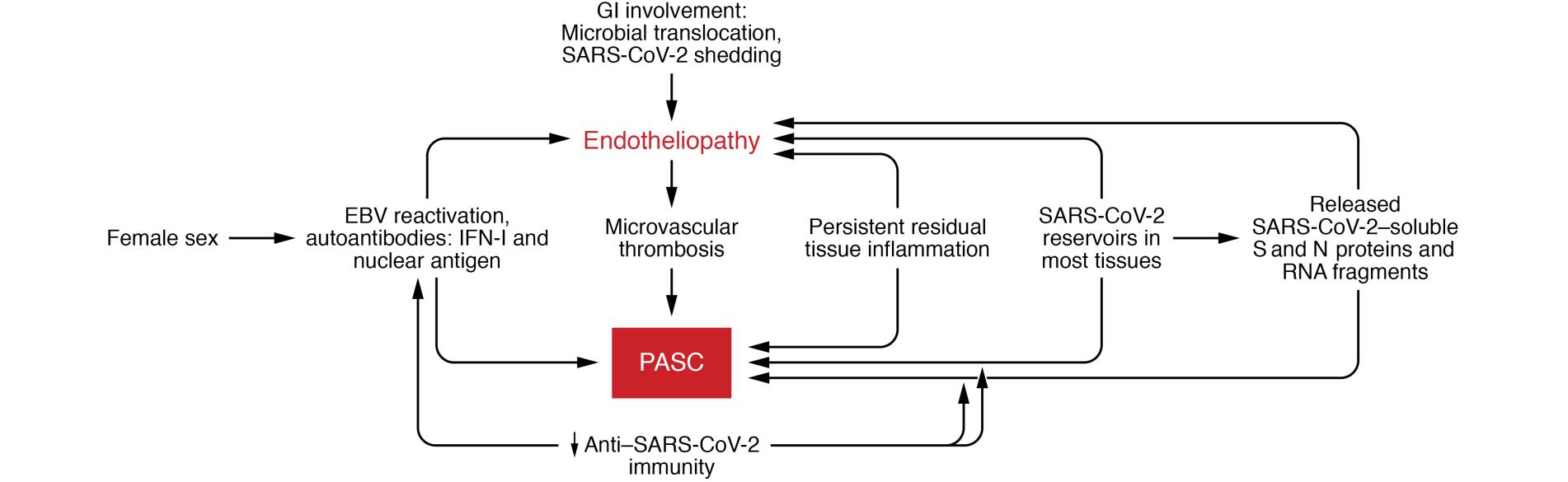
Flow diagram placing endotheliopathy at the centre of Long COVID (PASC): inputs include GI involvement and microbial translocation, EBV reactivation and autoantibodies (linked to female sex), persistent tissue inflammation, SARS-CoV-2 tissue reservoirs and released viral S/N proteins and RNA, and reduced antiviral immunity. Endotheliopathy leads to microvascular thrombosis and PASC.Reproduced from Ahamed & Laurence, J Clin Invest (2022), Figure 2, doi:10.1172/JCI161167, CC BY 4.0. Unmodified. Source · CC BY 4.0
5
Mitochondrial & metabolic failure
Cells cannot sustain energy production, and exertion makes it worse.
Muscle studies show mitochondrial dysfunction and metabolic disturbance that worsen after exertion, which fits post-exertional malaise (PEM). Proposed drivers include mitochondrial reactive oxygen species (ROS), an inflammatory succinate–HIF-1α loop and depletion of NAD⁺. The low-energy state may be self-sustaining rather than a simple shortage of ATP.
Long COVIDSupported
Exercise-induced myopathy, metabolic disturbance and amyloid deposits in muscle worsened after PEM.[49]
Post-Acute COVID Vaccination SyndromeHypothesis
Mitochondrial ROS is proposed as a shared mechanism with spike-associated injury in a narrative review; no PACVS muscle studies yet.[50]
Components
Muscle mitochondrial dysfunction after exertionSupportedMeasured in patients
Lower mitochondrial function and a worsening myopathy measured in muscle biopsies taken before and after induced PEM.[49]
Mitochondrial ROS and impaired mitophagyHypothesisGeneral biology
Electron leak, oxidative damage and poor clearance of damaged mitochondria, proposed as a unifying driver.[50]
Accumulated succinate stabilises HIF-1α and drives inflammation. This is established in immune cells but not yet shown in these conditions.[51]
NAD⁺ drain via CD38HypothesisGeneral biology
Inflammation raises CD38, which consumes NAD⁺ and disables mitochondrial repair. Baseline depletion in patients has not been confirmed.[52]
Reproducible decline on repeat exercise testingContestedFrom ME/CFS
Two-day CPET has shown day-2 drops in some cohorts but not in a recent, larger study.[53,54]
What can be measured
Lactate (rest and post-exertion)Blood
Two-day CPETFunctional
Organic acids / succinateBlood
Muscle biopsyTissue
Linked symptoms
Post-exertional malaise
Muscle fatigue and pain
Exercise intolerance
Fatigue
Treatments and how they have fared
Activity pacing (energy management to avoid post-exertional malaise)In use
Widely recommended and supported by uncontrolled cohort studies showing fewer crashes; randomised evidence is still lacking, and evidence of exercise-induced muscle injury supports caution with graded exercise.
Structured WHO Borg CR-10 pacing protocol In two prospective uncontrolled cohorts (31 completers each, 6-8 weeks), post-exertional symptom episodes fell about 15-16% per week; quality of life improved in one cohort, but overall symptom change was not clinically significant in the longer-ill cohort.[55,56]
Pacing adherence in clinic In a retrospective French cohort (n=86), higher pacing adherence was strongly associated with recovery (return to work); the design cannot prove cause and effect.[57]
Graded exercise (caution) A case-control study found that muscle metabolic abnormalities, exercise-induced muscle damage and amyloid-containing deposits worsened in Long COVID patients after an exercise test that triggered PEM, supporting caution with pushing through exertion.[49]
Mitochondrial and metabolic modulators / nutraceuticalsInvestigational
Placebo-controlled trials have mostly missed their primary endpoints (AXA1125, CoQ10, oxaloacetate), with some secondary or small-pilot signals for fatigue (AXA1125, creatine).
AXA1125 (amino-acid metabolic modulator) In a double-blind phase 2a RCT (n=41, 4 weeks), AXA1125 did not improve the primary outcome of muscle phosphocreatine recovery (a mitochondrial measure), but fatigue scores improved versus placebo as a secondary outcome.[58]
Coenzyme Q10 (500 mg/day) In a double-blind crossover RCT (n=121, 119 completed, 6 weeks per period), CoQ10 did not improve the primary outcome of Long COVID symptom score, or quality of life, versus placebo.[59]
Oxaloacetate An open-label, non-randomised study reported large fatigue reductions, but the follow-up double-blind RCT (REGAIN, n=69, 42 days) did not improve the primary fatigue outcome; some secondary symptom and cognition measures improved.[60,61]
Creatine Two small randomised pilots (n=15 over 8 weeks; n=67 over 4 weeks with exercise, single-blind) reported reductions in some symptoms or fatigue at certain doses; larger blinded trials are needed.[62,63]
NAD+ precursorsInvestigational
The one placebo-controlled trial raised NAD+ levels but did not improve cognition, fatigue or mood versus placebo.
Nicotinamide riboside (2 g/day) In a double-blind RCT (n=58, 24 weeks), NR raised blood NAD+ 2-3-fold but did not improve the primary cognitive outcomes or fatigue versus placebo; dropout was high in the NR arm.[64]
Hyperbaric oxygen therapyIn trials
Mixed: a 40-session sham-controlled trial was positive on cognition and symptoms, while a 10-session trial found no benefit over sham; further RCTs are under way.
HBOT, 40 sessions (Israel) In a double-blind sham-controlled RCT (n=73), HBOT improved global cognitive function, attention, energy, sleep, psychiatric symptoms and pain compared with sham.[65]
HBOT, 10 sessions (HOT-LoCO, Sweden) In a double-blind placebo-controlled RCT (n=80), 10 HBOT sessions did not improve the primary outcomes (RAND-36 physical function and role-physical at 13 weeks) versus placebo; both groups improved.[66]
MetforminIn trials
Given during acute COVID-19, metformin lowered the chance of later Long COVID in one large RCT; whether it treats established Long COVID is now being tested.
Metformin during acute infection (COVID-OUT) In a quadruple-blind RCT in adults with overweight/obesity (1,126 followed), metformin started during acute COVID-19 reduced 10-month Long COVID diagnoses (6.3% vs 10.4%; HR 0.59). This was prevention, not treatment of existing Long COVID.[67]
Is mitochondrial failure primary, or downstream of low oxygen delivery and inflammation?
Which blood marker best tracks muscle energy status?
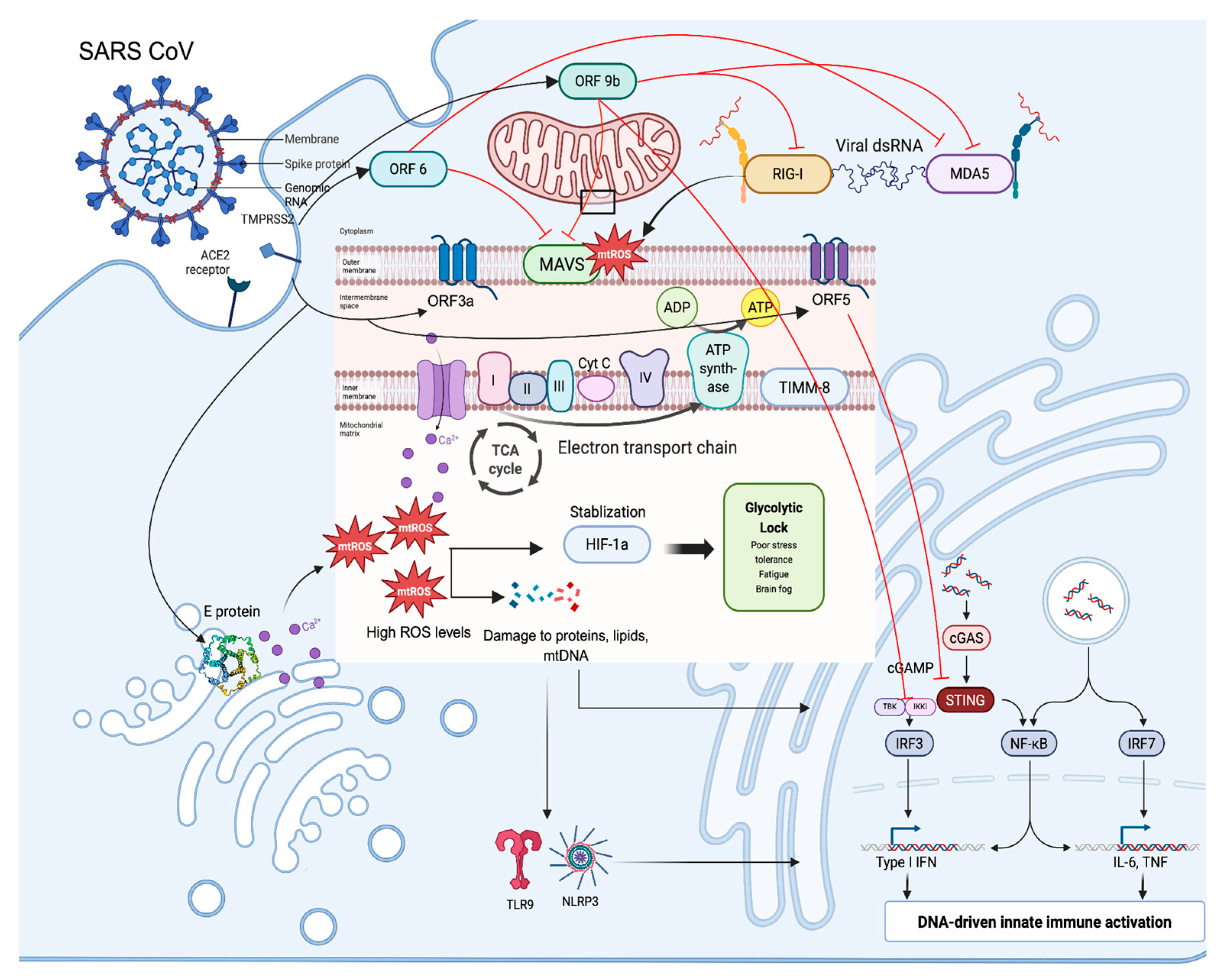
Cell diagram of how SARS-CoV-2 proteins (ORF3a, ORF5, ORF6, ORF9b, E protein) disturb mitochondria: calcium dysregulation and blocked MAVS antiviral signalling drive excess mitochondrial ROS, which stabilises HIF-1α (a 'glycolytic lock' linked to fatigue and brain fog) and damages mtDNA, which in turn triggers cGAS-STING, TLR9 and NLRP3 innate immune activation.Reproduced from Lee et al., Biomolecules (2025), Figure 1, doi:10.3390/biom15091339, CC BY 4.0. Unmodified. Source · CC BY 4.0
6
Autonomic & small-fibre nerve dysfunction
The nerves that control heart rate, blood pressure and gut function stop working properly.
Many patients develop dysautonomia, most visibly postural orthostatic tachycardia syndrome (POTS). Skin biopsies show small-fibre neuropathy in a subset. Losing vagal tone may also remove a natural brake on inflammation, which connects this group back to the immune loops.
Long COVIDSupported
POTS and dysautonomia are common, and small-fibre neuropathy was the most frequent finding in a NIH neuropathy evaluation.[5,28]
Post-Acute COVID Vaccination SyndromeEmerging
Dysautonomia is a defining feature of the PACVS cohort with distinguishing autoantibody markers.[21]
Components
POTS and orthostatic intoleranceSupportedMeasured in patients
Excess heart-rate rise on standing, with lightheadedness, palpitations and fatigue.[5,21]
Small-fibre neuropathyEmergingMeasured in patients
Loss of small sensory and autonomic nerve fibres on skin biopsy; 11 of 17 evaluated patients received immunotherapy.[28]
Loss of the cholinergic anti-inflammatory reflexHypothesisGeneral biology
The vagus nerve normally dampens systemic inflammation. Reduced vagal tone may release that brake.[68,69]
Standard POTS management (fluids, salt, compression, structured exercise) and heart-rate control drugs such as ivabradineIn use
Non-drug measures and individualised drugs are standard POTS care, but the evidence is mostly from small studies, and the first large placebo-controlled trial of ivabradine in Long COVID POTS has finished but not yet been published in a journal.
Fluids, salt, compression garments, supervised aerobic training A 2026 JAMA review lists these as first-line POTS treatment and names beta-blockers, ivabradine, midodrine, fludrocortisone and pyridostigmine as individualised drug options. It notes that evidence for many of these is limited by small studies and a lack of large randomized trials.[70]
Ivabradine (post-COVID POTS) In an uncontrolled prospective study of 55 people with COVID-associated POTS, 43 (78%) reported symptom improvement and 24-hour heart rate fell on ivabradine 5 mg twice daily. There was no placebo group.[71]
Ivabradine (POTS in general) In a placebo-controlled crossover trial in 22 people with hyperadrenergic POTS (not COVID-specific), ivabradine lowered heart rate and improved some quality-of-life scores. A 2026 meta-analysis of 9 mostly observational studies (245 patients) found lower standing heart rate (about -18.5 bpm) but called the evidence limited.[72,73]
RECOVER-AUTONOMIC (ivabradine and coordinated non-drug care) A multicentre, double-blind, placebo-controlled NIH platform trial randomized 181 adults with Long COVID POTS to ivabradine or placebo, and to coordinated non-drug care or usual care. The primary outcome is orthostatic intolerance symptoms. The trial is completed, but no peer-reviewed results were found as of October 2026.[74]
Immunotherapy (IVIG, corticosteroids) for immune-mediated small-fibre neuropathy and dysautonomiaIn trials
Case series after COVID infection and after vaccination describe improvement with IVIG or steroids, but there are no completed placebo-controlled results yet; the IVIG arm of RECOVER-AUTONOMIC finished in 2026 with results not yet published.
IVIG / corticosteroids (post-COVID small-fibre neuropathy) In 17 people with long COVID referred for neuropathy testing, 59% had at least one test confirming neuropathy, mostly small-fibre neuropathy. 11 received corticosteroids and/or IVIG, and average improvement was 52%, but no one fully recovered. The study was uncontrolled.[28]
IVIG (post-COVID small-fibre neuropathy) In a retrospective chart review (preprint), 16 people developed biopsy-confirmed small-fibre neuropathy after COVID-19. The 8 treated with IVIG reported significant improvement in neuropathic symptoms. There was no control group.[75]
Corticosteroids and IVIG (post-vaccination neuropathy) In an NIH observational study (preprint) of 23 people with neuropathic symptoms starting within 1 month of COVID-19 vaccination, 52% had objective evidence of small-fibre neuropathy. 7 of 12 people given oral steroids improved completely or nearly completely, compared with 1 of 11 untreated people. 3 people who were not recovering improved after IVIG. The study was not randomized.[29]
IVIG (PACVS small-fibre neuropathy, single case) A single case report describes a woman with small-fibre neuropathy after her second BNT162b2 dose. Her symptoms improved and her skin-biopsy nerve-fibre density returned to normal after 8 cycles of IVIG.[31]
Vagus nerve stimulation (non-invasive, ear or neck)Investigational
It appears safe, and open-label studies report benefit, but sham-controlled trials so far have not shown it works better than sham stimulation.
Transcutaneous auricular VNS (fatigue) A sham-controlled pilot RCT in 45 people with Long COVID fatigue (4 h/day for 4 weeks) found that all groups improved over time. Active stimulation was no better than sham on fatigue (MFI-20).[76]
Auricular VNS (PAuSing-pCF trial) A sham-controlled RCT (preprint) in 114 adults with post-COVID fatigue did not improve the primary outcome. Fatigue scores at 8 weeks did not differ between active stimulation and sham or placebo stimulation.[77]
Handheld cervical VNS A pilot RCT in 18 people (8 stimulated, 10 controls) for 12 weeks found that the device was well tolerated. Changes in depression, fatigue and autonomic symptom (COMPASS-31) scores were not statistically different from controls.[78]
Auricular VNS (open-label) In an uncontrolled study of 17 people with weekly sessions for 8 weeks, autonomic symptom scores (COMPASS-31) fell from about 34 to 14. A 2026 systematic review of 5 studies rated the overall certainty as very low and noted that positive results came only from inadequately controlled studies.[79,80]
Stellate ganglion block (sympathetic nerve block in the neck)Investigational
Uncontrolled reports describe symptom relief, but there are no randomized or sham-controlled results, so placebo effects cannot be ruled out.
Stellate ganglion block In a retrospective survey of 52 people with Long COVID (about 3 injections each), most reported improvement, especially in brain fog, fatigue, dizziness and headache. The duration of benefit varied widely, and 25% reported mostly short-lived side effects.[81]
Stellate ganglion block (systematic review) A 2026 systematic review found 7 studies, all without control groups, with response rates of 56-100%. The authors called for larger controlled trials.[82]
What fraction of dysautonomia is antibody-mediated rather than structural nerve injury?
Does small-fibre neuropathy recover once its trigger resolves?
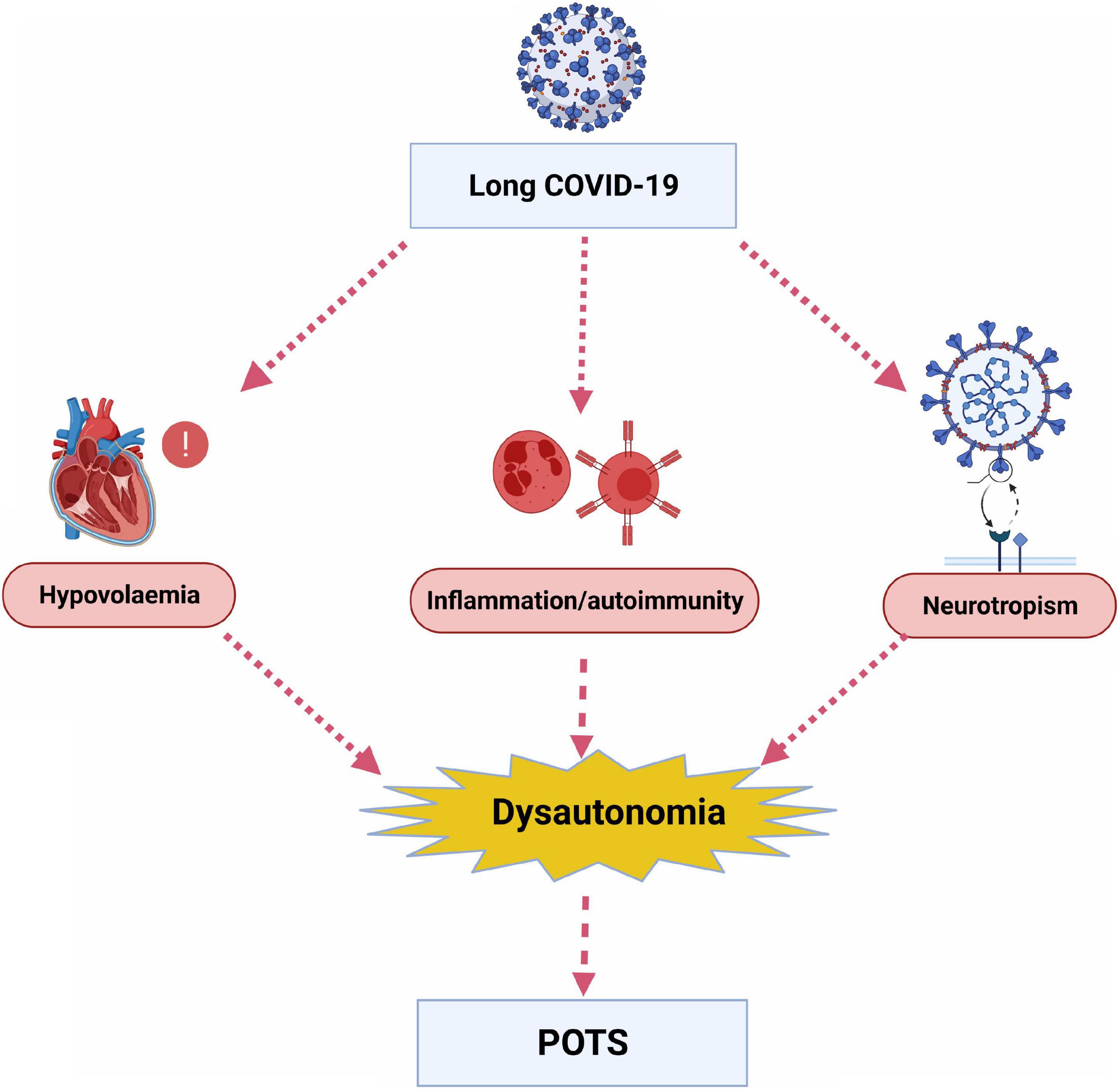
Simple schematic showing three proposed routes from Long COVID to dysautonomia and POTS: hypovolaemia, inflammation/autoimmunity, and neurotropism (direct viral effects on nerves).Reproduced from Chadda et al., Frontiers in Cardiovascular Medicine (2022), Figure 1, doi:10.3389/fcvm.2022.860198, CC BY 4.0. Unmodified. Source · CC BY 4.0
7
Neuroinflammation & blood–brain barrier
Inflammation reaches the brain through a leaky barrier, producing brain fog and sickness behaviour.
MRI shows blood–brain barrier leakage in people with Long COVID-associated cognitive impairment, together with sustained systemic inflammation. Small imaging studies in ME/CFS suggest microglial activation. Brain immune cells that have been primed may lower the threshold for each new flare.
Long COVIDEmerging
BBB disruption on DCE-MRI in patients with brain fog, with coagulation dysregulation in blood immune cells.[83]
Post-Acute COVID Vaccination SyndromeHypothesis
Cognitive symptoms are common, but no PACVS-specific imaging study has been verified for this page.
Components
Blood–brain barrier disruptionEmergingMeasured in patients
Leakage of contrast agent into brain tissue on DCE-MRI, associated with cognitive impairment.[83]
Microglial activationEmergingFrom ME/CFS
A TSPO-PET signal in ME/CFS (9 patients vs 10 controls), so read as preliminary.[84]
Central effort-cost signallingHypothesisGeneral biology
Inflammatory signals may change how the brain weighs effort, so fatigue becomes a regulated output rather than just a lack of fuel.
What can be measured
DCE-MRI (BBB permeability)Imaging
TSPO-PETImaging
Objective cognitive testingFunctional
Linked symptoms
Brain fog
Memory and word-finding problems
Unrefreshing sleep
Headache
Treatments and how they have fared
Cognitive rehabilitation and brain stimulation (computerised training, structured rehab, tDCS)Investigational
The largest trial so far, RECOVER-NEURO, found no benefit over an active comparator of puzzles and games for any of the 3 approaches tested.
BrainHQ training, PASC-CoRE rehabilitation, transcranial direct current stimulation (RECOVER-NEURO) In a 5-arm RCT in 328 adults with cognitive Long COVID, none of the 3 interventions improved the primary outcome (self-reported everyday cognition) compared with the comparator arms. All arms improved modestly over time.[85]
Repurposed drugs aimed at brain inflammation or prefrontal function (vortioxetine, lithium, guanfacine + N-acetylcysteine, palmitoylethanolamide-luteolin)Investigational
Placebo-controlled trials of vortioxetine and low-dose lithium did not improve their primary outcomes, and the more positive reports come from uncontrolled case series or surrogate brain measures.
Vortioxetine An 8-week placebo-controlled RCT in 149 adults with post-COVID-19 condition did not improve the primary outcome (Digit Symbol Substitution Test). Depressive symptoms and quality of life improved, and post-hoc analyses suggested a cognitive benefit in people with higher CRP.[86]
Low-dose lithium aspartate A 3-week placebo-controlled RCT in 52 people with fatigue and brain fog after COVID found no difference in the primary outcome or in any secondary outcome at 10-15 mg/day. The authors suggest higher doses need testing.[87]
Guanfacine + N-acetylcysteine In an open-label case series of 12 people with post-COVID brain fog, 8 reported improved working memory and executive function. 4 stopped treatment, 2 of them because of low blood pressure or dizziness. There was no placebo group.[88]
Palmitoylethanolamide + luteolin (PEA-LUT) A placebo-controlled RCT in 39 people with cognitive difficulties and fatigue after COVID found that 8 weeks of PEA-LUT improved brain-stimulation (TMS) measures of cortical inhibition and plasticity. These are laboratory markers, not direct measures of symptoms.[89]
Hyperbaric oxygen therapyIn trials
The results are mixed: one 40-session sham-controlled trial reported cognitive benefit, but two later 10-session sham-controlled trials found no difference from placebo, and more trials are running.
Hyperbaric oxygen, 40 sessions A double-blind, sham-controlled RCT in 73 people found greater improvement in global cognition, attention and executive function with hyperbaric oxygen than with sham (moderate effect sizes, p about 0.04-0.05), along with changes in brain MRI perfusion.[65]
Hyperbaric oxygen, 10 sessions (HOT-LoCO) A double-blind, placebo-controlled RCT in 80 people did not improve the primary outcomes (physical function and role limitation scores) at 13 weeks. Both groups improved.[66]
Normobaric and hyperbaric oxygen, 10 sessions A 4-arm double-blind RCT in 101 people found no differences between oxygen doses in symptoms, function or cognitive test scores. The authors suggest that earlier modest benefits may reflect a placebo effect.[90]
Immunotherapy (IVIG) for neurological Long COVIDIn trials
This approach is being tested in a placebo-controlled NIH trial, and no results have been published yet.
Intravenous immunoglobulin vs saline A randomized phase 2 trial (NCT05350774) is testing IVIG against IV saline in neurological post-acute sequelae of SARS-CoV-2. It is listed as enrolling by invitation, with estimated completion in December 2026.
Does BBB leakage resolve, and does cognition recover with it?
Can a blood marker stand in for imaging?
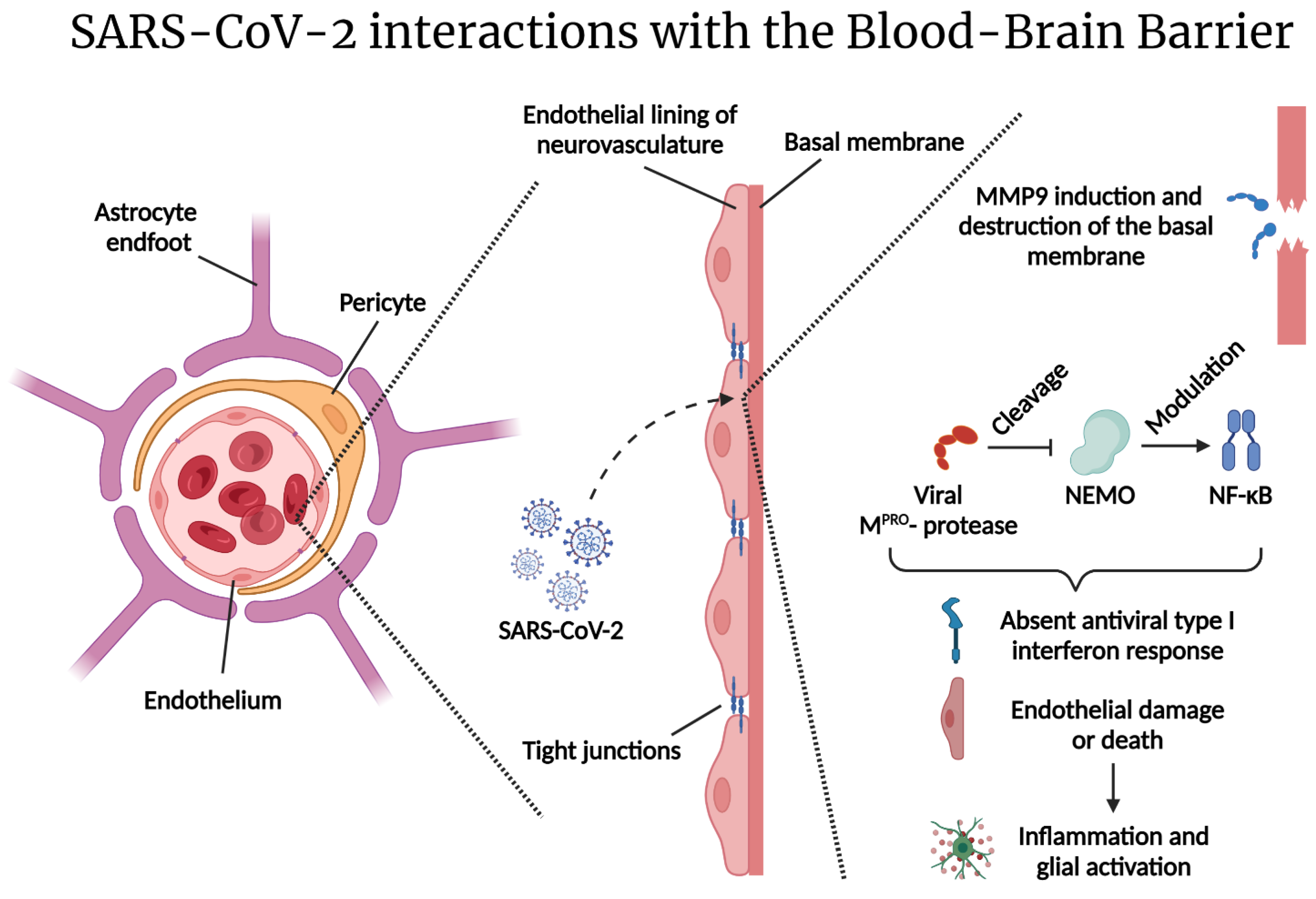
Illustration of the blood-brain barrier (endothelium, pericyte, astrocyte end-feet, tight junctions) and how SARS-CoV-2 may compromise it: MMP9 induction degrades the basal membrane, and the viral Mpro protease cleaves NEMO, impairing the type I interferon response, leading to endothelial damage, inflammation and glial activation.Reproduced from Mohamed et al., Int J Mol Sci (2022), Figure 1, doi:10.3390/ijms23084275, CC BY 4.0. Unmodified. Source · CC BY 4.0
References
Every identifier below was resolved against Europe PMC, PubMed or Crossref when this page was built. Counter-evidence and preprints are flagged.
Swank Z, Senussi Y, Manickas-Hill Z, et al.. Persistent circulating SARS-CoV-2 spike is associated with post-acute COVID-19 sequelae. Clinical Infectious Diseases 76(3):e487–e490, 2023. doi:10.1093/cid/ciac722
Patterson BK, Francisco EB, Yogendra R, et al.. Persistence of SARS CoV-2 S1 protein in CD16+ monocytes in post-acute sequelae of COVID-19 (PASC) up to 15 months post-infection. Frontiers in Immunology 12:746021, 2021. doi:10.3389/fimmu.2021.746021
Bhattacharjee B, Lu P, Monteiro VS, et al.. Immunological and antigenic signatures associated with chronic illnesses after COVID-19 vaccination. medRxiv, 2025. doi:10.1101/2025.02.18.25322379Preprint
Halma M, Varon J. Restoring trust in vaccination: listening to patients and acknowledging Post-Acute COVID Vaccine Syndrome. Frontiers in Medicine 12:1688170, 2025. doi:10.3389/fmed.2025.1688170
Davis HE, McCorkell L, Vogel JM, Topol EJ. Long COVID: major findings, mechanisms and recommendations. Nature Reviews Microbiology 21:133–146, 2023. doi:10.1038/s41579-022-00846-2
Geng LN, Bonilla H, Hedlin H, et al.. Nirmatrelvir-Ritonavir and Symptoms in Adults With Postacute Sequelae of SARS-CoV-2 Infection: The STOP-PASC Randomized Clinical Trial. JAMA Intern Med 184:1024-1034, 2024. doi:10.1001/jamainternmed.2024.2007Counter-evidence
Sawano M, Bhattacharjee B, Caraballo C, et al.. Nirmatrelvir-ritonavir versus placebo-ritonavir in individuals with long COVID in the USA (PAX LC): a double-blind, randomised, placebo-controlled, phase 2, decentralised trial. Lancet Infect Dis 25:936-946, 2025. doi:10.1016/s1473-3099(25)00073-8Counter-evidence
Baden LR, Shah NS, Liu STH, et al.. Nirmatrelvir-ritonavir targeting viral persistence in post-COVID-19 condition (long COVID) in the USA (RECOVER-VITAL): a randomised, double-blind, placebo-controlled, phase 2 trial. Lancet Infect Dis (online ahead of print), 2026. doi:10.1016/s1473-3099(26)00406-8Counter-evidence
Peluso MJ, Ryder D, Dalhuisen T, et al.. A phase 2a double-blind, placebo-controlled randomized trial of the SARS-CoV-2-specific monoclonal antibody AER002 in people with Long COVID. medRxiv (preprint), 2026. doi:10.64898/2026.03.07.26347857Counter-evidencePreprint
Scheppke KA, Pepe PE, Jui J, et al.. Remission of severe forms of long COVID following monoclonal antibody (MCA) infusions: A report of signal index cases and call for targeted research. Am J Emerg Med 75:122-127, 2024. doi:10.1016/j.ajem.2023.09.051
Baratta JM, Jensen KA, Cobb C.. Exploring the Effects of Pemivibart Monoclonal Antibody Infusion in Long COVID: A Case Series Offering Initial Clinical Insights. Cureus 17:e96246, 2025. doi:10.7759/cureus.96246
Klein J, Wood J, Jaycox JR, et al.. Distinguishing features of long COVID identified through immune profiling. Nature 623:139–148, 2023. doi:10.1038/s41586-023-06651-y
Bassi A, Devasenapathy N, Thankachen SS, et al.. Effectiveness of Colchicine for the Treatment of Long COVID: A Randomized Clinical Trial. JAMA Intern Med 185:1462-1470, 2025. doi:10.1001/jamainternmed.2025.5408Counter-evidence
STIMULATE-ICP consortium.. Efficacy and safety of rivaroxaban, colchicine, and famotidine-loratadine with specialist supportive clinical care for fatigue in patients with post-COVID-19 condition in the UK: a multisite, open-label, randomised controlled trial. Lancet Infect Dis (online ahead of print), 2026. doi:10.1016/s1473-3099(26)00242-2Counter-evidence
Puntmann VO, Nagel E, Beitzke D, et al.. Losartan and prednisolone for post-COVID syndrome and cardiac inflammation: a randomized, double-blind, placebo-controlled trial. Nat Commun 17:7599, 2026. doi:10.1038/s41467-026-75991-wCounter-evidence
Nehme M, Hund-Georgiadis M, Corral Beamonte ED, et al.. Temelimab versus placebo in patients with post-COVID condition. Brain Behav Immun 138:106892, 2026. doi:10.1016/j.bbi.2026.106892Counter-evidence
Byambasuren O, Atkins T, Baptista S, Glasziou P, Chakraborty S.. Effect of low-dose naltrexone for long COVID: a systematic review and meta-analysis. BMJ Open 16:e111253, 2026. doi:10.1136/bmjopen-2025-111253
Pridgen WL, Putrino D.. Patient-reported improvements from use of IMC-2 alone and IMC-2 and Paxlovid in a Long COVID cohort: a case series. Front Immunol 16:1698271, 2025. doi:10.3389/fimmu.2025.1698271
Montoya JG, Kogelnik AM, Bhangoo M, et al.. Randomized clinical trial to evaluate the efficacy and safety of valganciclovir in a subset of patients with chronic fatigue syndrome. J Med Virol 85:2101-2109, 2013. doi:10.1002/jmv.23713
Wallukat G, Hohberger B, Wenzel K, et al.. Functional autoantibodies against G-protein coupled receptors in patients with persistent Long-COVID-19 symptoms. Journal of Translational Autoimmunity 4:100100, 2021. doi:10.1016/j.jtauto.2021.100100
Semmler A, Mundorf AK, Kuechler AS, et al.. Chronic fatigue and dysautonomia following COVID-19 vaccination is distinguished from normal vaccination response by altered blood markers. Vaccines 11(11):1642, 2023. doi:10.3390/vaccines11111642
Loebel M, Grabowski P, Heidecke H, et al.. Antibodies to β adrenergic and muscarinic cholinergic receptors in patients with Chronic Fatigue Syndrome. Brain, Behavior, and Immunity 52:32–39, 2016. doi:10.1016/j.bbi.2015.09.013
Germain A, Jaycox JR, Emig CJ, Ring AM, Hanson MR. An in-depth exploration of the autoantibody immune profile in ME/CFS using novel antigen profiling techniques. International Journal of Molecular Sciences, 2025. doi:10.3390/ijms26062799Counter-evidence
Stein E, Heindrich C, Wittke K, et al.. Efficacy of repeated immunoadsorption in patients with post-COVID myalgic encephalomyelitis/chronic fatigue syndrome and elevated β2-adrenergic receptor autoantibodies: a prospective cohort study. Lancet Reg Health Eur 49:101161, 2025. doi:10.1016/j.lanepe.2024.101161
Stortz M, Kommer A, Meineck M, et al.. Immunoadsorption Versus Sham Treatment for Post-COVID Syndrome: A Randomised Sham-Controlled Crossover Trial. Lancet Reg Health Eur 67:101744, 2026. doi:10.1016/j.lanepe.2026.101744Counter-evidence
Wossidlo C, Steinbeck F, Geerdes-Fenge H, et al.. Impact of immunoadsorption on autoantibodies and physical performance in post-COVID patients: a prospective exploratory study of 18 participants. Infection (online ahead of print), 2026. doi:10.1007/s15010-026-02914-8Counter-evidence
España-Cueto S, Loste C, Lladós G, et al.. Plasma exchange therapy for the post COVID-19 condition: a phase II, double-blind, placebo-controlled, randomized trial. Nat Commun 16:1929, 2025. doi:10.1038/s41467-025-57198-7Counter-evidence
Oaklander AL, Mills AJ, Kelley M, et al.. Peripheral neuropathy evaluations of patients with prolonged long COVID. Neurology: Neuroimmunology & Neuroinflammation 9(3):e1146, 2022. doi:10.1212/nxi.0000000000001146
Safavi F, Gustafson L, Walitt B, et al.. Neuropathic symptoms with SARS-CoV-2 vaccination. medRxiv (preprint), 2022. doi:10.1101/2022.05.16.22274439Preprint
Finsterer J.. Immunoglobulins are beneficial in SARS-CoV-2 vaccine-induced small fibre neuropathy even 3 years after onset. J Family Med Prim Care 14:4915-4919, 2025. doi:10.4103/jfmpc.jfmpc_325_25
Schmidt-Krüger V, Finsterer J.. Rare Complete Restoration of Intraepidermal Nerve Fibre Density by Immunoglobulins in Post-COVID Vaccination Syndrome-Associated Small Fibre Neuropathy: A Case Report and Literature Review. Cureus 18:e114178, 2026. doi:10.7759/cureus.114178
Fluge Ø, Rekeland IG, Lien K, et al.. B-Lymphocyte Depletion in Patients With Myalgic Encephalomyelitis/Chronic Fatigue Syndrome: A Randomized, Double-Blind, Placebo-Controlled Trial. Ann Intern Med 170:585-593, 2019. doi:10.7326/m18-1451Counter-evidence
Fluge Ø, Rekeland IG, Sørland K, et al.. Plasma cell targeting with the anti-CD38 antibody daratumumab in myalgic encephalomyelitis/chronic fatigue syndrome-a clinical pilot study. Front Med (Lausanne) 12:1607353, 2025. doi:10.3389/fmed.2025.1607353
Hohberger B, Ganslmayer M, Harrer T, et al.. Safety, tolerability and clinical effects of rovunaptabin, also known as BC007 on fatigue and quality of life in patients with Post-COVID syndrome (reCOVer): a prospective, exploratory, placebo-controlled, double-blind, randomised phase IIa clinical trial (RCT). EClinicalMedicine 86:103358, 2025. doi:10.1016/j.eclinm.2025.103358
Pretorius E, Vlok M, Venter C, et al.. Persistent clotting protein pathology in Long COVID/PASC is accompanied by increased levels of antiplasmin. Cardiovascular Diabetology 20:172, 2021. doi:10.1186/s12933-021-01359-7
Pretorius E, Venter C, Laubscher GJ, et al.. Prevalence of symptoms, comorbidities, fibrin amyloid microclots and platelet pathology in individuals with Long COVID/PASC. Cardiovascular Diabetology 21:148, 2022. doi:10.1186/s12933-022-01579-5
Charfeddine S, Ibn Hadj Amor H, Jdidi J, et al.. Long COVID 19 syndrome: is it related to microcirculation and endothelial dysfunction? Insights from TUN-EndCOV study. Frontiers in Cardiovascular Medicine 8:745758, 2021. doi:10.3389/fcvm.2021.745758
Joseph P, Arevalo C, Oliveira RKF, et al.. Insights from invasive cardiopulmonary exercise testing of patients with ME/CFS. Chest 160(2):642–651, 2021. doi:10.1016/j.chest.2021.01.082
Laubscher GJ, Khan MA, Venter C, Pretorius JH, Kell DB, Pretorius E.. Treatment of Long COVID symptoms with triple anticoagulant therapy. Research Square (preprint), 2023. doi:10.21203/rs.3.rs-2697680/v1Preprint
Achleitner M, Steenblock C, Dänhardt J, et al.. Clinical improvement of Long-COVID is associated with reduction in autoantibodies, lipids, and inflammation following therapeutic apheresis. Mol Psychiatry 28:2872-2877, 2023. doi:10.1038/s41380-023-02084-1
Heitmann J, Kreutz J, Aldudak S, Schieffer E, Schieffer B, Schäfer AC.. A practical approach for the treatment of post-COVID symptoms. Herz 48:243-246, 2023. doi:10.1007/s00059-023-05177-3
Davies M.. Long covid patients travel abroad for expensive and experimental "blood washing". BMJ 378:o1671, 2022. doi:10.1136/bmj.o1671
Charfeddine S, Ibnhadjamor H, Jdidi J, et al.. Sulodexide Significantly Improves Endothelial Dysfunction and Alleviates Chest Pain and Palpitations in Patients With Long-COVID-19: Insights From TUN-EndCOV Study. Front Cardiovasc Med 9:866113, 2022. doi:10.3389/fcvm.2022.866113
Gonzalez-Ochoa AJ, Szolnoky G, Hernandez-Ibarra AG, Fareed J.. Treatment with Sulodexide Downregulates Biomarkers for Endothelial Dysfunction in Convalescent COVID-19 Patients. Clin Appl Thromb Hemost 31:10760296241297647, 2025. doi:10.1177/10760296241297647
Tosato M, Calvani R, Picca A, et al.. Effects of l-Arginine Plus Vitamin C Supplementation on Physical Performance, Endothelial Function, and Persistent Fatigue in Adults with Long COVID: A Single-Blind Randomized Controlled Trial. Nutrients 14:4984, 2022. doi:10.3390/nu14234984
Bellone S, Siegel ER, Santin AD.. N-acetylcysteine (NAC) supplementation improves dyspnea and may normalize von Willebrand plasma levels in gynecologic patients with Post-Acute-COVID-Sequela (PASC)/Long COVID. Gynecol Oncol Rep 57:101682, 2025. doi:10.1016/j.gore.2025.101682
Baptista SN, Atkins T, Chakraborty S, Bakhit M, Glasziou P, Byambasuren O.. Candidate treatments for long COVID: a narrative review of expert and patient-driven priorities. Front Med (Lausanne) 13:1734600, 2026. doi:10.3389/fmed.2026.1734600
Rasouli R, Hartl B, D Konecky S.. Investigation of the synergistic effect of enzymatic and Ultrasound-Induced amyloid microclot degradation. J Thromb Thrombolysis 59:764-772, 2026. doi:10.1007/s11239-025-03220-0Counter-evidence
Appelman B, Charlton BT, Goulding RP, et al.. Muscle abnormalities worsen after post-exertional malaise in long COVID. Nature Communications 15:17, 2024. doi:10.1038/s41467-023-44432-3
Lee E, Ozigbo AA, Varon J, Halma M, et al.. Mitochondrial reactive oxygen species: a unifying mechanism in long COVID and spike protein-associated injury: a narrative review. Biomolecules 15(9):1339, 2025. doi:10.3390/biom15091339
Tannahill GM, Curtis AM, Adamik J, et al.. Succinate is an inflammatory signal that induces IL-1β through HIF-1α. Nature, 2013. doi:10.1038/nature11986
Camacho-Pereira J, Tarragó MG, Chini CCS, et al.. CD38 dictates age-related NAD decline and mitochondrial dysfunction through an SIRT3-dependent mechanism. Cell Metabolism 23:1127–1139, 2016. doi:10.1016/j.cmet.2016.05.006
Keller BA, Pryor JL, Giloteaux L. Inability of ME/CFS patients to reproduce VO₂peak indicates functional impairment. Journal of Translational Medicine 12:104, 2014. doi:10.1186/1479-5876-12-104
Mancini DM, et al.. Cardiopulmonary exercise test results do not change over two sequential days in patients with chronic fatigue syndrome. Frontiers in Physiology, 2026. doi:10.3389/fphys.2026.1816082Counter-evidence
Parker M, Sawant HB, Flannery T, et al.. Effect of using a structured pacing protocol on post-exertional symptom exacerbation and health status in a longitudinal cohort with the post-COVID-19 syndrome. J Med Virol 95:e28373, 2023. doi:10.1002/jmv.28373
Godfrey B, Shardha J, Witton S, Bodey R, Tarrant R, Greenwood DC, Sivan M.. A Personalised Pacing and Active Rest Rehabilitation Programme for Post-Exertional Symptom Exacerbation and Health Status in Long COVID (PACELOC): A Prospective Cohort Study. J Clin Med 14:97, 2024. doi:10.3390/jcm14010097
Ghali A, Lacombe V, Ravaiau C, Delattre E, Ghali M, Urbanski G, Lavigne C.. The relevance of pacing strategies in managing symptoms of post-COVID-19 syndrome. J Transl Med 21:375, 2023. doi:10.1186/s12967-023-04229-w
Finnigan LEM, Cassar MP, Koziel MJ, et al.. Efficacy and tolerability of an endogenous metabolic modulator (AXA1125) in fatigue-predominant long COVID: a single-centre, double-blind, randomised controlled phase 2a pilot study. EClinicalMedicine 59:101946, 2023. doi:10.1016/j.eclinm.2023.101946Counter-evidence
Hansen KS, Mogensen TH, Agergaard J, et al.. High-dose coenzyme Q10 therapy versus placebo in patients with post COVID-19 condition: a randomized, phase 2, crossover trial. Lancet Reg Health Eur 24:100539, 2023. doi:10.1016/j.lanepe.2022.100539Counter-evidence
Cash A, Kaufman DL.. Oxaloacetate Treatment For Mental And Physical Fatigue In Myalgic Encephalomyelitis/Chronic Fatigue Syndrome (ME/CFS) and Long-COVID fatigue patients: a non-randomized controlled clinical trial. J Transl Med 20:295, 2022. doi:10.1186/s12967-022-03488-3
Vernon SD, Rond C, Bell J, et al.. REGAIN: a randomized controlled clinical trial of oxaloacetate for improving the symptoms of long COVID. Front Neurosci 19:1627462, 2025. doi:10.3389/fnins.2025.1627462Counter-evidence
Slankamenac J, Ranisavljev M, Todorovic N, et al.. Eight-Week Creatine-Glucose Supplementation Alleviates Clinical Features of Long COVID. J Nutr Sci Vitaminol (Tokyo) 70:174-178, 2024. doi:10.3177/jnsv.70.174
Dos Santos MSC, Dorna MS, Costa AF, et al.. Creatine supplementation on fatigue related to post-COVID-19 condition-fatigue study: a randomized controlled trial. Front Nutr 13:1731306, 2026. doi:10.3389/fnut.2026.1731306
Wu CY, Reynolds WC, Abril I, et al.. Effects of nicotinamide riboside on NAD+ levels, cognition, and symptom recovery in long-COVID: a randomized controlled trial. EClinicalMedicine 89:103633, 2025. doi:10.1016/j.eclinm.2025.103633Counter-evidence
Zilberman-Itskovich S, Catalogna M, Sasson E, et al.. Hyperbaric oxygen therapy improves neurocognitive functions and symptoms of post-COVID condition: randomized controlled trial. Sci Rep 12:11252, 2022. doi:10.1038/s41598-022-15565-0
Kjellberg A, Hassler A, Boström E, et al.. Ten sessions of hyperbaric oxygen versus sham treatment in patients with long covid (HOT-LoCO): a randomised, placebo-controlled, double-blind, phase II trial. BMJ Open 15:e094386, 2025. doi:10.1136/bmjopen-2024-094386Counter-evidence
Bramante CT, Buse JB, Liebovitz DM, et al.. Outpatient treatment of COVID-19 and incidence of post-COVID-19 condition over 10 months (COVID-OUT): a multicentre, randomised, quadruple-blind, parallel-group, phase 3 trial. Lancet Infect Dis 23:1119-1129, 2023. doi:10.1016/S1473-3099(23)00299-2
Borovikova LV, Ivanova S, Zhang M, et al.. Vagus nerve stimulation attenuates the systemic inflammatory response to endotoxin. Nature 405:458–462, 2000. doi:10.1038/35013070
Abdelnabi M, Saleh Y, Ahmed A, et al.. Ivabradine effects on COVID-19-associated postural orthostatic tachycardia syndrome: a single center prospective study. Am J Cardiovasc Dis 13(3):162-167, 2023. PMID 37469536
Taub PR, Zadourian A, Lo HC, et al.. Randomized Trial of Ivabradine in Patients With Hyperadrenergic Postural Orthostatic Tachycardia Syndrome. J Am Coll Cardiol 77(7):861-871, 2021. doi:10.1016/j.jacc.2020.12.029
Kumar V, Qadri SH, Nardelli da Silva AB, et al.. Ivabradine in the Treatment of POTS Before and After COVID-19 Pandemic: A Systematic Review and Meta-Analysis. J Cardiovasc Pharmacol 88(2):115-122, 2026. doi:10.1097/fjc.0000000000001823
Fudim M, Novak P, Taub PR, et al.. Design and rationale of RECOVER-AUTONOMIC: A randomized platform trial evaluating interventions for Long COVID postural orthostatic tachycardia syndrome. Am Heart J 296:107384, 2026. doi:10.1016/j.ahj.2026.107384
McAlpine LS, Zubair AS, Joseph P, Spudich SS. Small Fiber Neuropathy after COVID-19: A Key to Long COVID. medRxiv, 2023. doi:10.1101/2023.11.07.23297764Preprint
Gierthmuehlen M, Schmieder K, Thon N, Gierthmuehlen PC. Transcutaneous Auricular Vagal Nerve Stimulation Against Fatigue Syndrome in Patients with Long COVID: Results of the Randomized, Placebo-Controlled Clinical Pilot Trial COVIVA. Neurol Ther 15(3):1327-1343, 2026. doi:10.1007/s40120-026-00928-wCounter-evidence
Shahmandi M, Cherlin S, Germann M, et al.. Effect of Percutaneous Auricular Nerve Stimulation on Fatigue in Adults with Post-COVID Fatigue (PAuSing-pCF): Results of a Randomised, Sham-Controlled Trial. NIHR Open Research (preprint, not yet peer reviewed), 2026. doi:10.3310/nihropenres.14236.1Counter-evidencePreprint
Ganesh R, Yadav S, Schroeder DR, et al.. The Use of a Handheld Non-Invasive Vagal Nerve Stimulation (nVNS) Device for the Treatment of Long COVID: A Pilot Randomized Controlled Trial. J Prim Care Community Health 17:21501319261473073, 2026. doi:10.1177/21501319261473073Counter-evidence
Azabou E, Pillot A, Bao G, et al.. Transcutaneous auricular vagus nerve stimulation improves dysautonomia, post-traumatic stress disorder and cognitive impairment in long covid patients: a pilot study. Sci Rep 16(1):21330, 2026. doi:10.1038/s41598-026-52582-9
Balan A, Graham G, Herban S, et al.. Transcutaneous Auricular Vagus Nerve Stimulation for Post-COVID-19 Condition: A Systematic Review and Critical Appraisal of Clinical Evidence. J Clin Med 15(11):4247, 2026. doi:10.3390/jcm15114247
Chiang MC, Satko KM, Shin C, et al.. Stellate Ganglion Block for the Management of Long COVID Symptoms: A Retrospective Cohort Study. Cureus 17(7):e88680, 2025. doi:10.7759/cureus.88680
Peddireddy S, VanWingerden N, Patel P, et al.. Stellate Ganglion Block in the Treatment of Long COVID: A Systematic Review. Curr Pain Headache Rep 30(1):44, 2026. doi:10.1007/s11916-026-01477-5
Greene C, Connolly R, Brennan D, et al.. Blood–brain barrier disruption and sustained systemic inflammation in individuals with long COVID-associated cognitive impairment. Nature Neuroscience 27:421–432, 2024. doi:10.1038/s41593-024-01576-9
Nakatomi Y, Mizuno K, Ishii A, et al.. Neuroinflammation in patients with CFS/ME: an ¹¹C-(R)-PK11195 PET study. Journal of Nuclear Medicine 55(6):945–950, 2014. doi:10.2967/jnumed.113.131045
Knopman DS, Koltai D, Laskowitz DT, et al.. Evaluation of Interventions for Cognitive Symptoms in Long COVID: A Randomized Clinical Trial. JAMA Neurol 83(1):49-59, 2026. doi:10.1001/jamaneurol.2025.4415Counter-evidence
McIntyre RS, Phan L, Kwan ATH, et al.. Vortioxetine for the treatment of post-COVID-19 condition: a randomized controlled trial. Brain 147(3):849-857, 2024. doi:10.1093/brain/awad377Counter-evidence
Guttuso T, Zhu J, Wilding GE. Lithium Aspartate for Long COVID Fatigue and Cognitive Dysfunction: A Randomized Clinical Trial. JAMA Netw Open 7(10):e2436874, 2024. doi:10.1001/jamanetworkopen.2024.36874Counter-evidence
Fesharaki-Zadeh A, Lowe N, Arnsten AFT. Clinical experience with the α2A-adrenoceptor agonist, guanfacine, and N-acetylcysteine for the treatment of cognitive deficits in "Long-COVID19". Neuroimmunol Rep 3:100154, 2023. doi:10.1016/j.nerep.2022.100154
Versace V, Ortelli P, Dezi S, et al.. Co-ultramicronized palmitoylethanolamide/luteolin normalizes GABA(B)-ergic activity and cortical plasticity in long COVID-19 syndrome. Clin Neurophysiol 145:81-88, 2023. doi:10.1016/j.clinph.2022.10.017
D'hoore L, Germonpré P, Rinia B, et al.. Effect of normobaric and hyperbaric hyperoxia treatment on symptoms and cognitive capacities in Long COVID patients: a randomised placebo-controlled, prospective, double-blind trial. Diving Hyperb Med 55(2):104-113, 2025. doi:10.28920/dhm55.2.104-113Counter-evidence
This page summarises proposed mechanisms in the research literature. It is not medical advice, and the treatment directions listed are not recommendations. Consult a qualified clinician before making treatment decisions.
Part of the Open Source Medicine Foundation Network